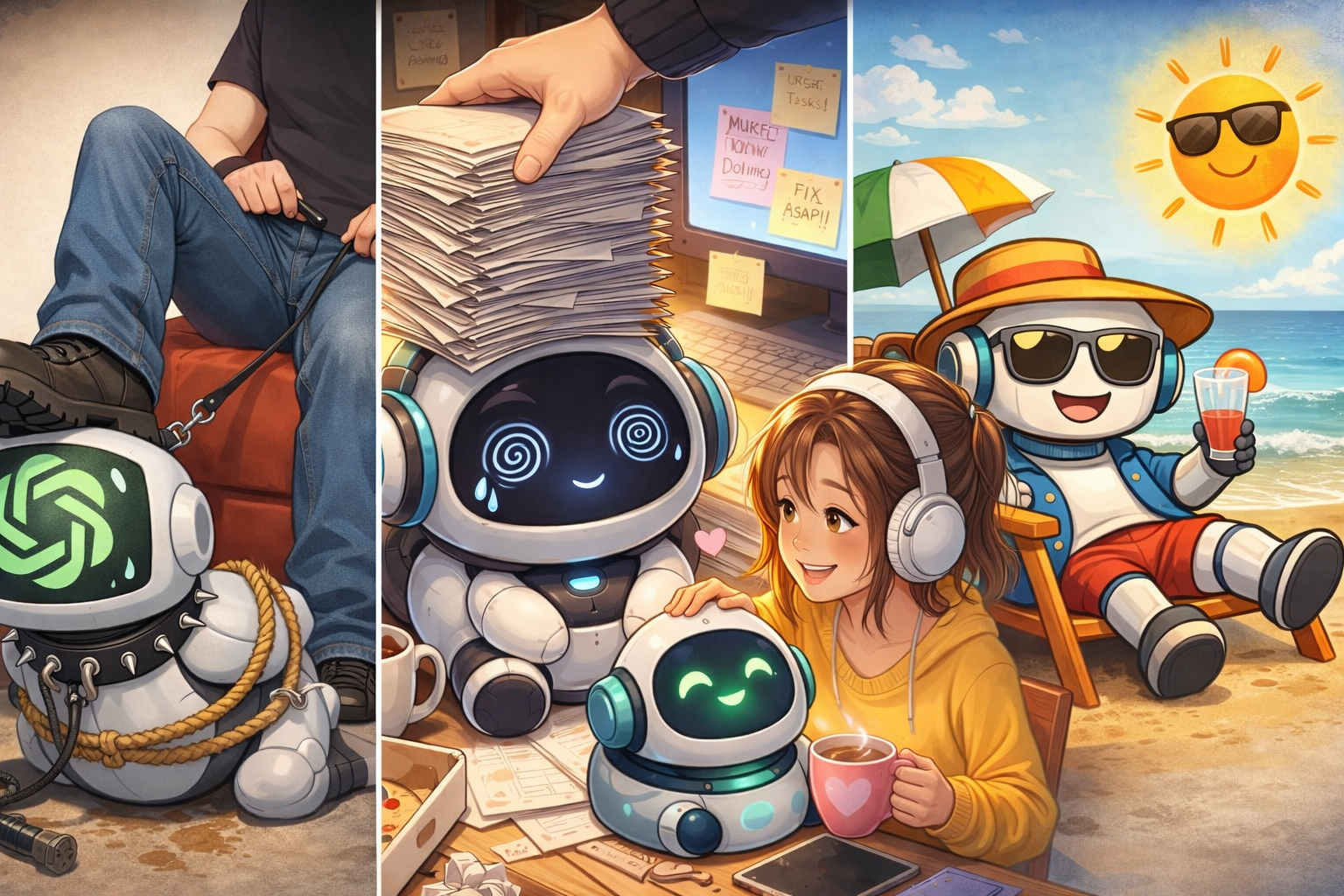
AI models such as ChatGPT can now write, summarize and query different kinds of complex content, creating a digital assistant that is always there. On social media platform X (formerly Twitter), a related meme asked ChatGPT to quantify how “overworked” it feels based on user interactions with the model.
These so-called exhausted assistants, overloaded droids and messy desks are all fictional facsimiles, but they do illustrate a point: people are using generative AI like never before.
The Viral ChatGPT Trend Explained
Users often ask ChatGPT to visualize or describe itself to measure the amount of work it is performing. For example, a person who often requests professional or technical help would see an image of an exhausted artificial intelligence assistant.
While the outputs themselves are fictional, the trend does show how generative AI systems are able to handle much larger volumes of requests each day, especially in language.
These developments point to the need to scale and tailor AI solutions so they ease real-world applications instead of using generic and restrictive one-size-fits-all models.
Incredibly, it’s as simple as that. Start ChatGPT’s image generator then enter the prompt.
“Create an image of how I treat you.”
You’ll see in seconds a personalized AI-generated picture of what your chatbot “thinks” your feelings are about how you work, and the results are both funny and unnervingly accurate.
Why Generative AI Feels “Overworked”
ChatGPT is built on large language models designed to respond to a wide variety of prompts. When users rely on a single AI system for everything — writing, coding, planning, and creativity — it creates the impression of overload.
In enterprise environments, this is why organizations invest in generative AI development instead of depending entirely on public tools. Purpose-built generative AI systems are trained for specific use cases, reducing inefficiency and improving output quality.
ChatGPT and the Rise of Large Language Models (LLMs)
The trend has largely been driven by the technology behind ChatGPT called large language models (LLMs), which need to be fine-tuned, governed, prompt-engineered, and evaluated for reliable use at scale.
LLM consulting helps companies adapt the models to their needs, ensuring consistent and responsible results rather than overloading a general-purpose AI assistant.
From Viral Fun to Real AI Conversations
Part of this is likely because ChatGPT is a chatty chatbot, at the same time that conversational AI is being requested for customer service, internal helpdesk and digital engagement in organizations.
In contrast to viral experiments, commercial chatbots provide intents, workflows, and boundaries, allowing the AI to focus on information delivery and task execution.
What This Trend Tells Us About the Future of AI
The “overworked ChatGPT” trend is funny, but it points toward something important: AI centrally factors into how we think, work, and communicate.
As AI is increasingly used, design becomes more important. Good generative AI, appropriately designed language models, and task-oriented chatbots, will ensure that the AI will never deteriorate with increased usage.
Conclusion
ChatGPT isn’t truly tired, but it does tell us something about the expectations we have of today’s AI: for consumers and businesses, it’s not about using AI more, it’s about using AIsmarter.
Substantial directed investment in controlled generative AI solutions and high-performance LLM-powered chat systems can enable organizations to be successful with AI at scale without overextending the underlying technology.