How Webflow Design Is Transforming: Trends Shaping the Digital Landscape in 2026
-
Author
-
Post DateDecember 12, 2025
Webflow design trends 2026
The digital world is evolving faster than ever, and Webflow continues to lead the shift toward smarter, more immersive, and more user-centric experiences. As brands push for next-gen digital presence, Webflow design trends 2026 highlight a powerful blend of creativity, AI automation, speed, and accessibility.
Below is a complete breakdown of how Webflow design is transforming the digital landscape in 2026 — powered by innovation, performance, and no-code freedom
As no-code design evolves, Webflow empowers designers with AI-driven tools, organic shapes, 3D interactions, and built-in SEO and accessibility support. These innovations are creating cleaner, faster, and more expressive digital experiences. From minimal aesthetics to dynamic motion, responsive layouts, and AI-generated illustrations, the trends of 2026 highlight Webflow’s continued shift toward creativity, performance, and long-term scalability — setting a new benchmark for modern digital design.
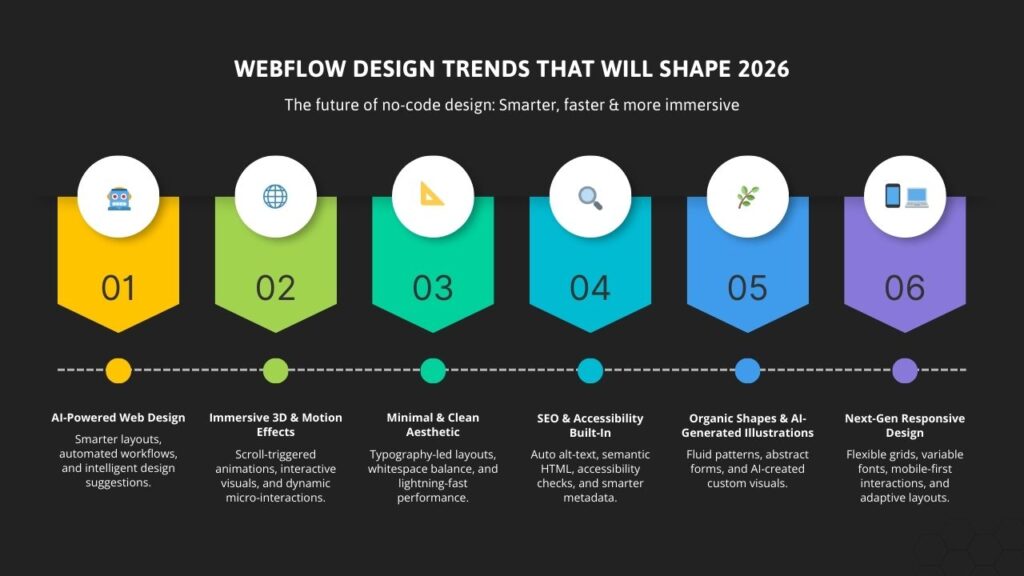
- 1. AI-Powered Web Design: Smarter, Faster, More Efficient:
AI now plays a major role in shaping modern Webflow designs. From generating layouts to automating repetitive tasks, AI-powered web design is transforming workflows.
What’s driving this trend:
- Smart layouts and component creation
- AI-assisted SEO & accessibility suggestions
- Predictive design recommendations
- Automated style consistency
Webflow + AI is pushing no-code into a new era of speed and creativity.
- 2. Immersive 3D & Motion-Based Experiences:
2026 marks the rise of 3D Webflow design, where interaction, depth, and movement define digital storytelling.
Expect more of:
- Scroll-triggered animations
- Interactive 3D product demos
- Rich micro-interactions
- Realistic effects & transitions
This shift strongly influences immersive web design across industries.
- 3. Minimal Web Design 2026: Clean, Fast & High-Impact:
The design world is moving toward aesthetic clarity. Minimal web design 2026 uses white space, clean grids, and typography-first layouts for high engagement.
Why it works:
- Faster performance
- Better UX
- Higher mobile visibility
- Stronger brand clarity
Webflow’s flexible system keeps minimal layouts visually powerful yet lightweight.
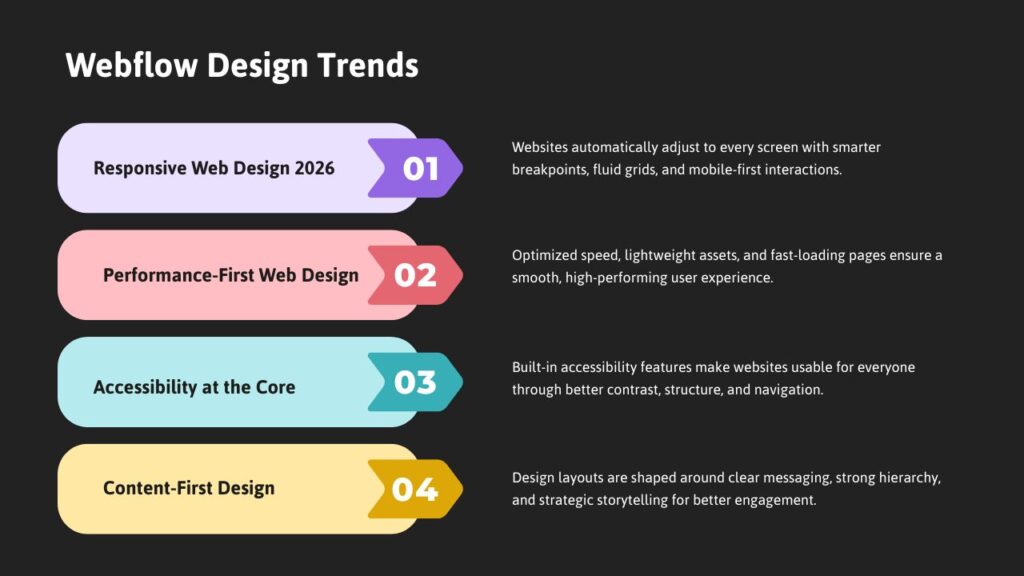
- 4. Responsive Web Design 2026: Intelligent Adaptability:
Modern sites need to work flawlessly across devices. Responsive web design 2026 is more adaptive, fluid, and scalable.
Enhancements include:
- Variable fonts
- Smart breakpoints
- Improved tap-friendly interactions
- Viewport-responsive spacing
This trend ensures every experience is mobile-first and user-friendly.
- 5. Performance-First Web Design:
Performance is now a ranking factor — not an afterthought. Performance-first web design focuses on speed, structure, and stability,
Webflow 2026 enhancements support:
- Faster rendering
- Asset compression
- Lightweight animations
- Cleaner exported code
This is essential for SEO, UX, and conversions.
- 6. Accessibility at the Core of Webflow Designs:
Inclusive design is no longer optional. Accessibility web design 2026 ensures every user has a seamless experience.
Webflow simplifies this with:
- ARIA support
- Keyboard-friendly components
- Better semantic HTML
- Automated color contrast checking
Accessibility = trust, reach, and better engagement.
- 7. Content-First Design Architecture:
Modern brands prioritise storytelling over decoration. Content-first design structures pages around message clarity and user intent.
This approach includes:
- Clean CMS architecture
- Story-driven layouts
- Strong typography hierarchy
Modular design components
It aligns design and strategy from the start.
- 8. Next-Gen Web Design Systems:
Growing brands need consistency at scale. Webflow’s advanced design system tools enable next-gen web design that’s unified and future-proof.
Core elements include:
- Component-based structure
- Global typography + color tokens
- Systematic spacing
- Reusable UI patterns
This builds scalability into every project.
- 9. SEO & Accessibility Built-In :
A major Webflow update in 2026 is deeper SEO and accessibility integration — making compliance effortless for designers.
What’s built-in now:
- Automatic schema metadata
- Better sitemap control
- Image AI alt-text suggestions
- Link structure optimization
- Real-time accessibility scoring
- Improved semantic tagging
This trend supports performance-first web design and helps sites rank higher organically.
- 10. Organic Shapes & AI-Generated Illustrations :
Another major design trend is the rise of organic shapes and AI-generated illustrations. These styles bring a natural, human feel to digital layouts.
What’s trending:
- Soft blobs, waves & fluid patterns
- Abstract organic backgrounds
- AI-created vector artwork
- Personalized illustrations for branding
- Nature-inspired design elements
These visuals make modern Webflow designs look fresh, artistic, and unique — with AI offering faster, limitless creativity.
As Webflow continues to break boundaries in the no-code space, these trends highlight a future where design becomes more adaptive, efficient, and experience-driven. The integration of AI, immersive visuals, and built-in performance tools empowers creators to build smarter and faster without compromising creativity. Brands that embrace these shifts will not only enhance user engagement but also strengthen trust, visibility, and long-term digital impact. With Webflow shaping the next era of web development, now is the perfect time for businesses to refine their design approach and unlock new levels of innovation, scalability, and user-focused growth.
With Webflow pushing rapid advancements, the shift toward automation, personalization, and interactive storytelling is only accelerating. Designers can now craft experiences that feel custom-built while relying on powerful no-code tools that streamline development time and eliminate technical bottlenecks. As users demand faster load times, intuitive navigation, and visually rich interfaces, Webflow’s evolving features make it easier to meet — and exceed — these expectations. The growing focus on accessibility, mobile responsiveness, and SEO-ready structures ensures every website is optimized from the inside out. Ultimately, businesses that adopt these 2026 Webflow trends early will be better positioned to build meaningful, high-performing digital ecosystems that grow with their audiences and stand the test of time.
Check out our following blogs for an in-depth look at UX best practices and digital growth strategies
• Importance of User Experience (UX) Design in Web Development
• How Icube Technolabs Digital Growth Services Can Transform Businesses
Conclusion
From AI-powered web design to organic illustration trends, Webflow is shaping a future where design is faster, more dynamic, and more accessible than ever. The shift toward 3D Webflow design, minimal aesthetics, performance-first structure, and built-in SEO + accessibility tools defines the digital evolution of 2026.